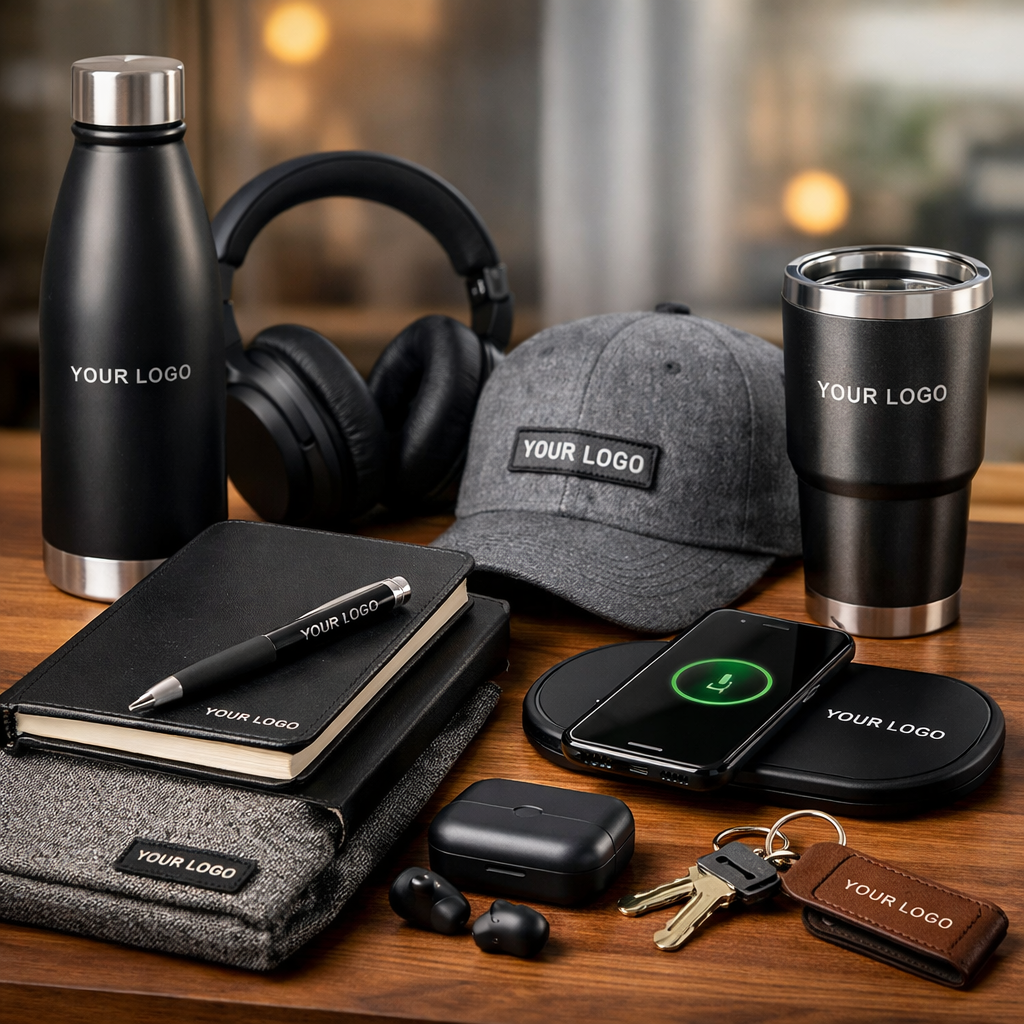
Premium Branded Merchandise That Doesn't Feel Cheap
There is a big difference between branded merchandise that makes people think, nice, and branded merchandise that makes people think, they definitely ordered the cheapest option.
And people notice.
The problem is not branded merchandise itself. The problem is bad branded merchandise. Cheap-feeling materials, oversized logos, awkward colors, poor fit, flimsy packaging, and random product choices can make a company look less thoughtful instead of more professional.
Good merch does the opposite. It makes your brand feel put together. It makes people want to keep the item. It helps your company look polished, current, and intentional.
If you want premium branded merchandise that does not feel cheap, the answer is not just spending more money. It is choosing better products, using better design, and branding them in a way that feels elevated.
Why cheap merch backfires
Branded merchandise is not neutral.
When someone receives a product from your business, they are making a judgment about your company whether you intended that or not. If the item feels low quality, looks generic, or has no real use, that impression can turn negative fast.
Recent research keeps pointing to the same pattern: people want better branded products, not just more of them. PPAI says consumers respond best when promo items feel useful, personal, and good to the touch, and its 2026 research found durability, design, and material are key reasons people keep branded items for six months or longer. VistaPrint's 2025 study also found 83% of consumers use the branded items they receive, 80% prioritize practicality, and 58% say a promotional item positively changed how they view a brand.
That means the bar is higher now. If your merch feels cheap, people are more likely to ignore it, toss it, or quietly let it shape their opinion of your brand in the wrong direction.
What makes branded merchandise feel premium
Premium merch usually has a few things in common.
1. The product is actually useful
The fastest way to make merch feel cheap is to choose something people do not need.
Premium does not always mean luxurious. Often it just means practical and well made.
Think about items people use in normal life:
- •insulated drinkware
- •quality notebooks
- •soft apparel
- •tote bags with structure
- •tech accessories
- •desk items that solve a real problem
ASI's recent trade-show reporting says the same categories keep outperforming gimmicks: useful tools, drinkware, tech accessories, and durable apparel.
If the item fits naturally into someone's routine, it instantly feels more valuable.
2. The materials feel good in hand
People can feel cheap instantly.
A thin shirt, brittle plastic, weak zipper, rough notebook cover, or flimsy pen can ruin the impression of the whole piece. On the other hand, soft fabric, weighted drinkware, clean stitching, and durable finishes make an item feel elevated before someone even thinks about the branding.
4imprint's guidance puts it plainly: even a useful or interesting item gets forgotten if it is cheaply made, and recipients often connect the quality of the product with the quality of the company that gave it to them.
That is why material choice matters so much. People do not separate the merch from the brand. To them, it is all one experience.
3. The branding is subtle
One of the biggest mistakes businesses make is trying to scream their logo from every angle.
That usually does not feel premium. It feels desperate.
Better merch tends to use branding more carefully:
- •smaller logos
- •cleaner placement
- •tone-on-tone decoration
- •one strong brand color instead of five
- •designs that look wearable or giftable
- •messaging that fits the product
PPAI and ASI both point toward the same lesson here: design quality drives perceived value. Thoughtful aesthetics, strong copy, and intentional use of space make a product feel more memorable and more worth keeping.
The best branded merchandise looks like something someone would choose even if your logo was not on it.
4. The product matches the audience
A premium item for a startup team may not be the same as a premium item for conference attendees, restaurant customers, realtors, or executive clients.
Premium is partly about fit.
A sleek tumbler might be perfect for a corporate welcome kit. A heavyweight hoodie could make sense for a music drop. A branded golf towel might work better for a realtor event than a generic keychain ever would.
When the product matches the person receiving it, it feels considered. When it does not, it feels like leftover inventory.
5. The packaging does some of the work
Presentation matters more than people think.
A decent item stuffed into a messy poly bag can feel cheap. A simple item, packed cleanly in a thoughtful box or sleeve, can feel significantly more premium.
You do not need over-the-top luxury packaging. You just need packaging that feels intentional and consistent with the brand.
That might mean:
- •matte boxes
- •tissue or crinkle fill
- •custom wrap bands
- •thank-you cards
- •simple inserts explaining the product
- •clean labeling
Premium is often just the result of good editing and good presentation.
The best types of premium branded merchandise
If your goal is to create branded merch that people actually want to keep, these categories tend to work especially well.
Premium drinkware
Drinkware remains one of the strongest categories because people use it often and keep it visible. PPAI's 2026 consumer research found 73% of consumers use branded bottles or tumblers daily, and 70% say a durable, well-designed piece makes them feel good about the brand.
Best options:
- •insulated tumblers
- •reusable water bottles
- •ceramic mugs with clean branding
- •travel coffee cups
Quality apparel
Apparel can feel incredibly premium or incredibly cheap. There is almost no middle ground.
The difference usually comes down to:
- •fabric weight
- •fit
- •decoration method
- •branding size
- •color choice
VistaPrint's 2025 research found branded apparel can boost trust and professionalism, with respondents saying it improves how they view a business and helps them identify staff more easily.
Best options:
- •heavyweight T-shirts
- •quarter zips
- •crewnecks
- •hoodies
- •hats with tasteful embroidery
Better desk and office products
This category works especially well for corporate clients, welcome kits, events, and internal team use.
Best options:
- •hard-cover notebooks
- •premium pens
- •desk pads
- •wireless chargers
- •laptop sleeves
- •cable organizers
The goal is not to give people more clutter. The goal is to give them something that earns a permanent place on their desk or in their bag.
Useful event merch
For conferences and trade shows, premium usually means one of two things: highly practical or unexpectedly well designed.
VistaPrint's 2025 survey found practical items remain the most wanted categories, while ASI's 2026 trade-show reporting says high-volume attendees quickly reject gimmicky swag in favor of useful, durable pieces.
Best options:
- •premium tote bags
- •portable chargers
- •bottle openers with a good finish
- •elevated notebooks
- •compact tech organizers
- •quality umbrellas
How to make merch feel expensive without blowing the budget
This is where a lot of companies get it wrong.
They assume premium means they need to buy the most expensive item in the catalog. That is not true.
Usually, merch feels more premium when you do these five things:
Choose fewer items
One solid item is better than five filler products.
Upgrade the finish
A matte coating, embroidery, soft-touch surface, or cleaner print method can completely change how the product feels.
Simplify the branding
A smaller logo often creates a stronger impression than a huge one.
Stick to a tighter color palette
Too many colors can make merch look noisy. A limited palette usually feels more polished.
Spend on the item people will touch most
If you are doing a kit, put the budget into the hero item. That is usually the apparel, drinkware, or tech piece.
Premium is often less about extravagance and more about restraint.
Signs your branded merchandise feels cheap
Here are the biggest red flags:
- •the logo is way too big
- •the item feels thin or flimsy
- •the product has no real use
- •the colors look off-brand
- •the decoration looks low resolution
- •the packaging feels rushed
- •the item looks like something everyone else is already giving away
- •the merch feels like an ad instead of a product
If your merch checks more than one of those boxes, it probably needs a rethink.
A better formula for branded merch
A simple way to approach premium branded merchandise is this:
Pick one product people already like
Then upgrade the quality.
Then simplify the branding.
Then present it well.
That is the formula.
Not more items.
Not louder branding.
Not cheaper bulk.
Just better choices.
Final thoughts
Premium branded merchandise does not feel premium because it is expensive.
It feels premium because it is useful, well designed, well made, and branded with restraint.
When you get that right, merch stops feeling like throwaway swag and starts feeling like an extension of your brand.
And that is exactly what good branded merchandise should be.
If you want branded merchandise that feels polished, current, and actually worth keeping, Cre8Merch can help you create custom pieces that reflect your brand properly instead of making it look cheap.
Want branded merchandise that actually feels premium?
We help businesses create custom merch that looks better, feels better, and makes a stronger impression. Book a consultation and let's build something your audience will actually want to keep.
FAQ section
What makes branded merchandise feel premium?
Premium branded merchandise usually feels useful, durable, well designed, and subtly branded. Material quality, finish, packaging, and product choice all matter.
What branded merchandise should businesses avoid?
Businesses should usually avoid flimsy, low-use, over-branded products that feel generic or disposable.
Is premium branded merchandise worth it?
Yes. Higher-quality merchandise is more likely to be kept, used, and associated with a positive impression of your brand.
What are the best premium promotional products?
Popular premium categories include drinkware, apparel, notebooks, tech accessories, and useful event products like totes or umbrellas.
Enjoyed this article?
Read More Articles