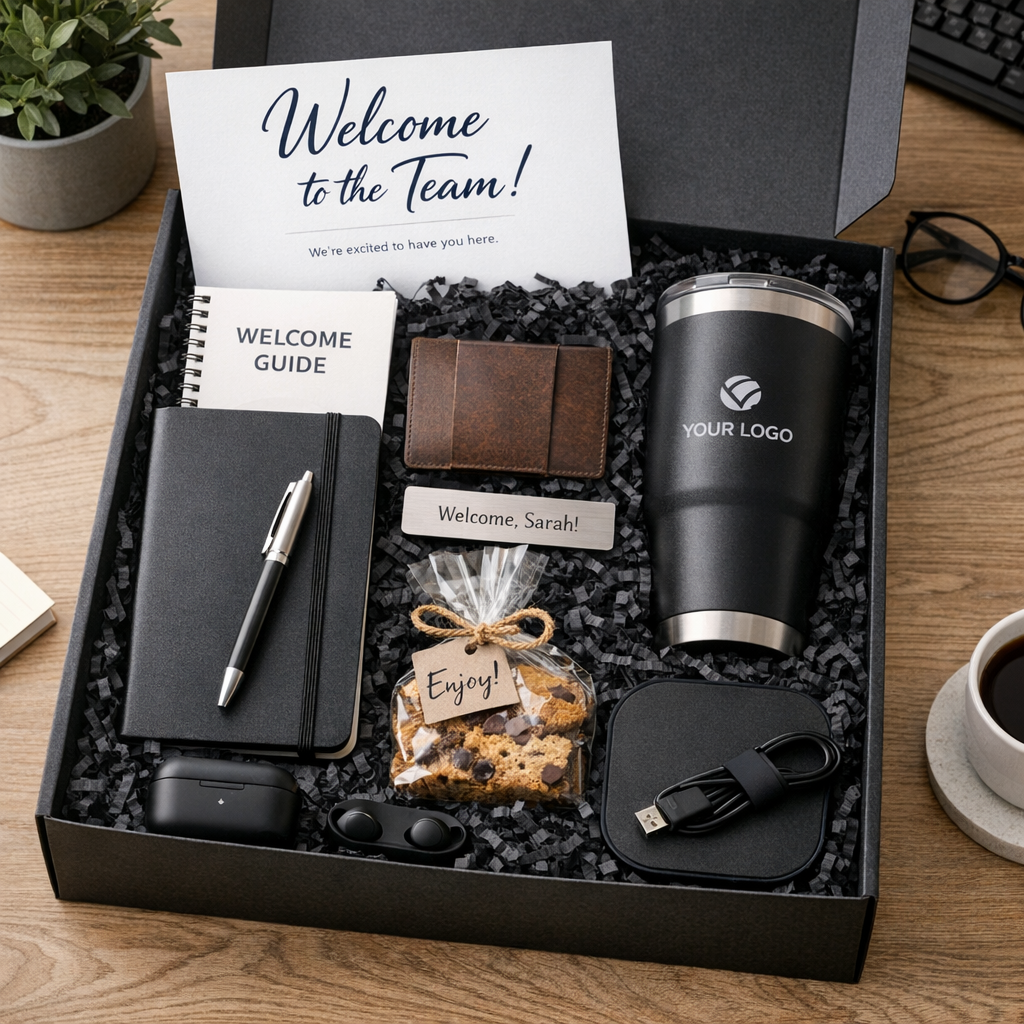
What to Put in an Employee Welcome Kit
An employee welcome kit should do two things well.
First, it should make a new hire feel genuinely welcomed. Second, it should give them useful items they will actually keep, use, and associate with your company in a positive way.
Too many welcome kits miss the mark because they feel random. A cheap pen, a rushed notebook, a generic mug, and a T-shirt no one asked for do not create a strong first impression. A better welcome kit feels intentional. It reflects your brand, supports onboarding, and makes the employee feel like someone prepared for their arrival.
If you are wondering what to put in an employee welcome kit, here is the simplest answer: include a mix of practical tools, branded essentials, and one or two thoughtful extras that make the experience feel personal.
What an employee welcome kit should actually do
A great welcome kit is not just about merchandise.
It should help a new employee:
- •feel expected and valued
- •understand your company culture
- •get set up faster
- •use the items in real life
- •remember your brand positively
The best kits are not overloaded. They are curated. Every item should have a purpose.
The best things to put in an employee welcome kit
1. A welcome note
This is one of the most overlooked pieces, and it is often the most important.
A short printed card or note from the founder, manager, or team lead makes the kit feel human. It does not need to be long. It just needs to feel real.
A simple note can say:
"Welcome to the team. We're excited to have you here and can't wait to see what you do with us."
That alone can make the whole package feel more thoughtful.
2. A high-quality notebook
A notebook is one of the safest and most useful branded items you can include.
New hires are usually taking notes constantly in the first few weeks, whether that is during training, meetings, or internal process walkthroughs. A clean, well-designed notebook feels professional and practical.
Go for something that looks polished, not overly promotional. Subtle branding usually works better than a giant logo slapped across the front.
3. A good pen
If you include a pen, make it a good one.
This sounds obvious, but a cheap pen can instantly lower the perceived quality of the whole kit. A solid metal or soft-touch pen feels better in hand and creates a more premium impression.
One good pen is better than three throwaway ones.
4. Branded drinkware
A quality tumbler, insulated bottle, or clean ceramic mug is one of the strongest items you can include in a welcome kit.
People actually use drinkware. It often ends up on desks, in cars, in meetings, or at home. That makes it one of the best branded items for both practicality and visibility.
Choose something durable and simple. The goal is everyday use, not novelty.
5. Apparel they would actually want to wear
Branded apparel can be a great addition, but only if it feels wearable.
A soft T-shirt, quarter zip, crewneck, or hoodie can work really well when the fit, quality, and design are right. The mistake most companies make is choosing low-quality apparel with heavy branding that feels more like a uniform than something someone would voluntarily wear.
Keep the design tasteful. Think subtle brand pride, not forced advertising.
6. Tech essentials
Depending on your team and budget, tech items can make a welcome kit feel especially useful.
Examples include:
- •mouse pad
- •webcam cover
- •wireless charger
- •phone stand
- •cable organizer
- •laptop sleeve
These are especially good for remote teams, hybrid staff, or employees who spend most of their day at a desk.
7. Desk items that do not feel disposable
Desk merch can work well when it is selected carefully.
Acrylic stand, calendar pad, premium sticky notes, coaster, or clean desktop organizer pieces can all add value. The key is to avoid clutter. Do not fill the box with filler items just to make it look full.
Fewer, better items always wins.
8. Snacks or consumables
A small snack item or treat can make the experience feel warmer and more complete.
This could be:
- •packaged cookies
- •popcorn
- •chocolate
- •coffee or tea
- •locally made snacks
Consumables are nice because they add personality without becoming long-term clutter. They can also be tailored to your company culture or local area.
9. An employee handbook or quick-start guide
Not everything in the kit has to be merch.
A short printed onboarding guide, culture booklet, team intro card, or "what to expect in your first week" insert can make the kit much more useful. This is especially effective if it is well-designed and easy to skim.
Instead of dumping information, give them a clean, simple guide that helps them feel oriented.
10. Something personalized
This is what separates a basic welcome kit from a memorable one.
That could mean:
- •adding the employee's name
- •choosing department-specific items
- •including a role-relevant tool
- •writing a personalized note
- •tailoring the kit for remote versus in-office staff
Personalization does not need to be complicated. Even one small custom touch can make a kit feel intentional.
What not to put in an employee welcome kit
A welcome kit can go wrong when it feels cheap, cluttered, or generic.
Try to avoid:
- •low-quality items that break or look flimsy
- •too many items with giant logos
- •random filler products with no real use
- •poor-quality apparel
- •outdated printed materials
- •anything that creates more clutter than value
A welcome kit should feel edited. If an item does not serve a purpose, leave it out.
A simple formula for building a great welcome kit
If you want a reliable structure, use this:
1 practical item
Something they will use right away, like a notebook or drinkware
1 premium branded item
Something that reflects your company well, like apparel or a quality tumbler
1 onboarding support piece
A welcome note, first-week guide, or culture card
1 optional extra
A snack, tech accessory, or personalized item
That is enough to create something thoughtful without overcomplicating it.
Welcome kit ideas by company type
For corporate teams
Go polished and professional:
- •notebook
- •pen
- •tumbler
- •welcome note
- •laptop accessory
For startups
Go modern and useful:
- •hoodie or tee
- •bottle
- •sticker pack
- •notebook
- •snack item
For remote teams
Focus on practical shipping-friendly items:
- •mug or tumbler
- •desk pad
- •notebook
- •onboarding guide
- •webcam cover or cable organizer
For client-facing teams
Choose items that feel elevated:
- •premium pen
- •sleek notebook
- •branded apparel
- •structured welcome card
- •quality drinkware
How to make your welcome kit feel more premium
You do not need a massive budget to make a kit feel impressive.
What matters more is:
- •better packaging
- •cleaner design
- •consistent branding
- •useful products
- •fewer cheap fillers
- •one or two thoughtful touches
Presentation matters. A well-packed box with intentional items will always feel better than a larger box full of forgettable merch.
Final thoughts
The best employee welcome kits are not the biggest. They are the most considered.
When you choose products people actually want, keep the branding tasteful, and make the experience feel human, your welcome kit becomes more than just swag. It becomes part of a stronger first impression.
And that is the whole point.
If you are building employee welcome kits and want them to feel useful, premium, and aligned with your brand, Cre8Merch can help you create something custom instead of cookie-cutter.
Need help creating employee welcome kits that actually feel premium?
We help businesses build custom welcome kits with branded merchandise people will genuinely want to use. Book a consultation and let's create something that fits your team and your brand.
Enjoyed this article?
Read More Articles